
Source review
Confirm scope, accuracy, formats, coordinates and intended use.
manual 3D modeling
Experienced modelers interpret structure and purpose, then control geometry, topology, materials and hierarchy where automated reconstruction cannot deliver a clean, usable result.
Capabilities
Source data, accuracy and intended use define the workflow. These capabilities can be combined without forcing the project into a fixed package.
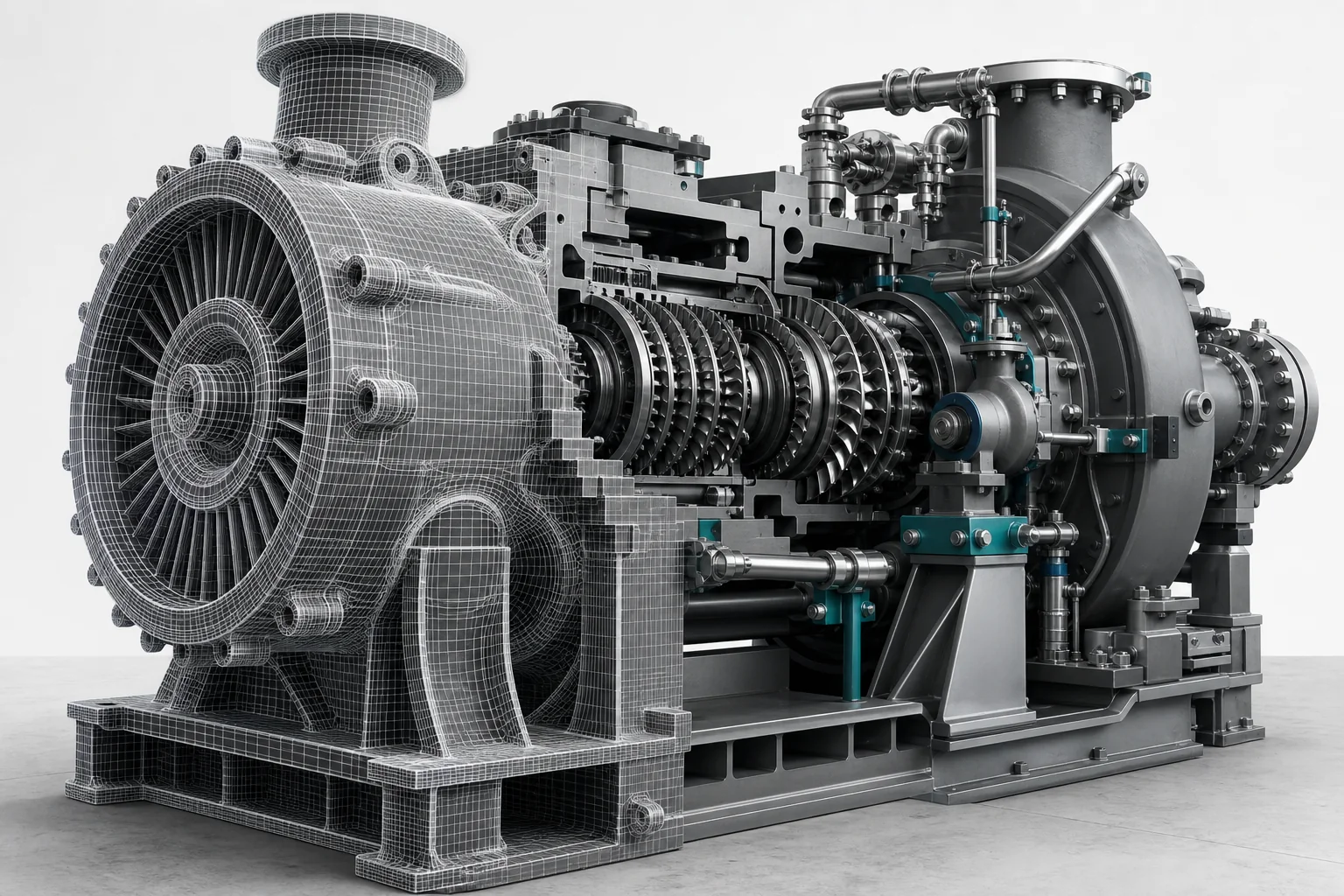
Housings, interfaces, piping and critical internal components reconstructed from drawings and images.
Floors, rooms, facades, MEP elements and major fixtures organized for display and operations.
Detailed source meshes, clean retopology, normal baking and production-ready real-time assets.
Consistent PBR materials with controlled channels, resolutions and reuse.
Delivery Standard
Specific values depend on the source data and target environment. Applicable criteria are agreed at the start instead of relying on vague quality labels.
| Level of detail | LOD defined by viewing distance, interaction requirements and target device |
|---|---|
| Topology | Polygon count, normals, UVs, material slots and editability |
| Object hierarchy | Buildings, floors, systems, equipment or components organized for retrieval |
| Textures | Base Color, Normal, Roughness, Metallic and other agreed channels |
| Engine fit | Budgets and variants prepared for browser, desktop or mobile use |
| Review workflow | Milestone previews, feedback revisions and final file validation |
Workflow
A representative pilot validates source quality, accuracy, visual language, hierarchy and performance early in the project.
Confirm scope, accuracy, formats, coordinates and intended use.
Lock hierarchy, detail, materials and performance on a representative asset.
Model, review and preview assets against the agreed manifest.
Verify files, versions, hierarchy, performance and delivery notes.
FAQ
Automated methods cover large real-world areas quickly. Manual modeling is better when the asset needs interpreted structure, clean topology, a controlled hierarchy or intentional visual detail. Hybrid workflows are common.
No. Its main advantage is control. Detail is invested where it supports identification, interaction, accuracy or appearance.
Yes. Confirmed and inferred areas are separated during review so assumptions are not presented as verified geometry.
Yes. We can deliver low-poly models, LOD variants, optimized UVs, texture atlases and engine-specific lightweight assets.
Project Contact
Include the asset scope, available source data, intended use and preferred formats. We will identify the right modeling and engine workflow.